Why Cordless Tool Batteries Lose Capacity
Why packs run out sooner as they age, and the everyday habits that slow it down.
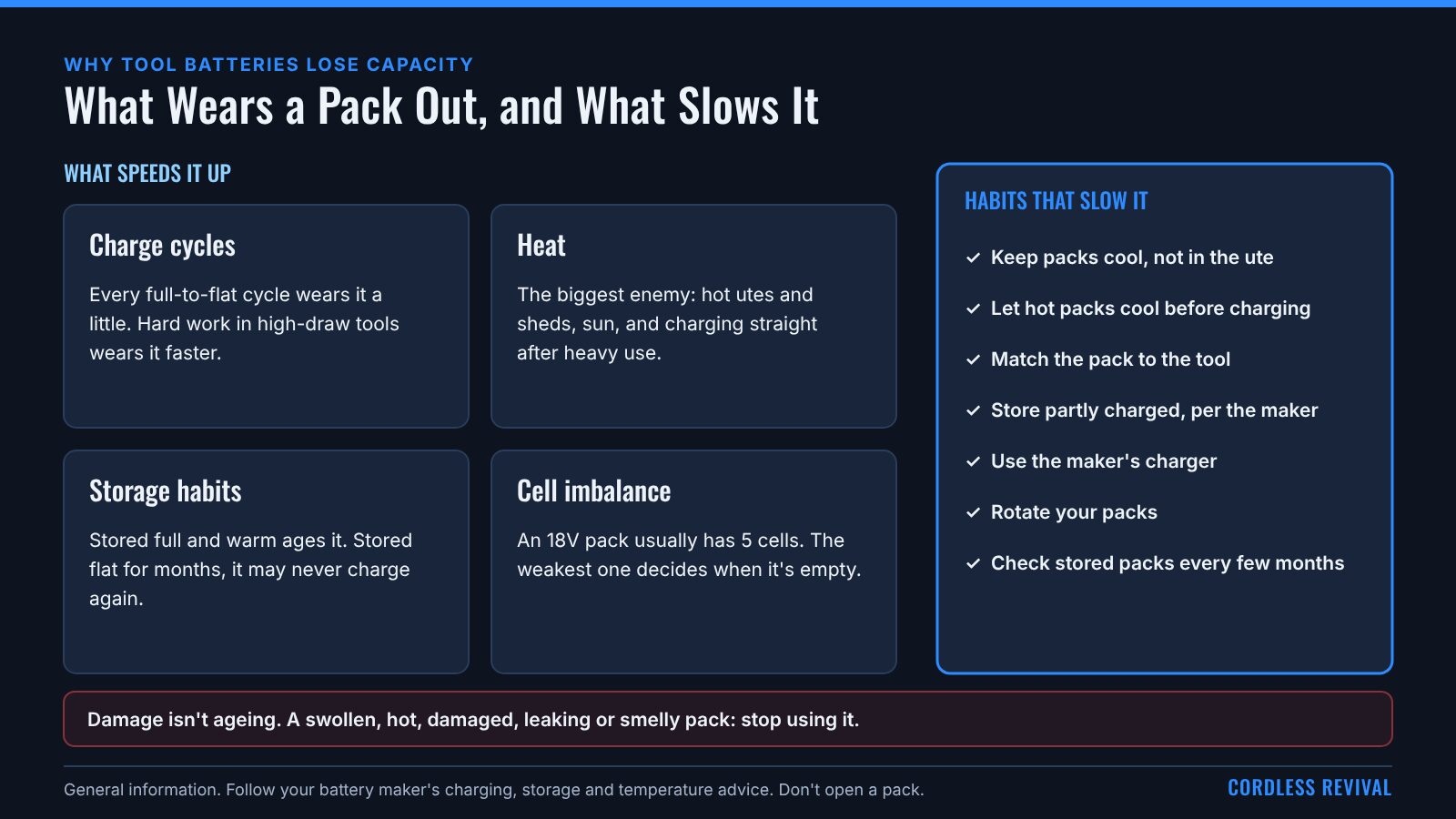
A new pack might run your drill all day. A few years later, the same pack is flat by smoko. That's normal. Every lithium-ion battery slowly loses capacity, and some habits make it happen faster than others.
This guide explains what's going on inside the pack, at a simple level, and what you can do about it.
1. All lithium-ion batteries age
Inside each cell, small chemical changes happen every time it's charged and used, and even while it sits on the shelf. Over time, these changes do two things:
- They reduce capacity. The cell can hold less charge, so the pack runs out sooner.
- They raise internal resistance. The cell struggles more to deliver high current, so the pack sags or cuts out under heavy load sooner than it used to.
You can't stop this, but you can slow it down.
2. Use: charge cycles
Each time a pack is charged and discharged, it wears a little. A full cycle is roughly the equivalent of using the pack from full to flat once. Two half-discharges count about the same as one full one.
How many cycles a pack lasts depends on the cells, how hard they're worked, and the heat they see. The maker's information is the only reliable guide for your pack. There's no single number that applies to every battery.
Working a pack hard ages it faster. High-draw tools like grinders, saws, chainsaws and mowers pull big currents, which heat the cells. Running a small pack in a hungry tool works the cells harder than a larger pack would.
3. Heat: the biggest enemy
Heat speeds up the chemical changes that age a cell. Common causes:
- Leaving packs in a hot ute, car or shed, or in direct sun.
- Charging a pack straight after heavy use, while it's still hot. Many chargers wait or charge slowly until the pack cools, which is a good sign.
- Running a pack flat-out in a high-draw tool, especially in summer.
Cold is a problem too. Packs deliver less in the cold, and charging very cold packs can harm them. Follow the maker's temperature limits for use and charging.
4. Storage habits
- Stored full: sitting fully charged for long periods, especially somewhere warm, ages lithium-ion cells faster.
- Stored flat: a pack left flat for months can drop so low that the protection board won't let it charge again, or the cells can be damaged.
- Somewhere in between is usually best for long storage. Many makers recommend storing packs partly charged. Check your manual.
Our Lithium Battery Storage and Disposal guide covers storage in more detail.
5. Cell imbalance
A tool pack has several cells joined in series. An 18V pack usually has 5. They start out closely matched, but as they age, they can drift apart. One cell might end up with less capacity or more resistance than the others.
That matters because the pack is only as good as its weakest cell:
- On discharge, the weakest cell runs low first, and the protection cuts the pack off, even though the other cells still have charge left.
- On charge, the pack may stop charging when the strongest cell is full, before the others are.
So a pack with one weak cell can lose a lot of runtime, even if the other cells are healthy. Some packs and chargers balance the cells. Others don't. A multimeter reading of the whole pack can't show imbalance, because it only sees all the cells added together. See How to Test a Cordless Pack With a Multimeter.
6. Signs a pack is losing capacity
- It runs for noticeably less time than it used to, in the same tool and job.
- It cuts out under heavy load, then works again for a bit after a rest.
- It drops charge while sitting unused.
- The fuel gauge drops quickly from full.
A pack that's simply ageing is normal. But if a pack is swollen, hot, damaged, leaking or smells, stop using it. That isn't normal ageing. See When Should a Battery Pack Not Be Repaired?.
6a. Two kinds of wear, two kinds of symptom
| What's wearing | What you notice | Example |
|---|---|---|
| Lost capacity (holds less charge) | Shorter runtime on light jobs; the fuel gauge drops sooner | The drill driver sinks fewer screws per charge |
| Higher internal resistance (struggles to deliver current) | Cuts out or slows under heavy load, then recovers after a rest; gets hotter | The circular saw stalls in hardwood but the same pack still runs a torch for hours |
Most ageing packs show both, but in different amounts. A pack with high resistance may be retired from a hungry tool and still be useful in a light one.
6b. What lost capacity means in practice
Capacity loss works like a smaller pack.
Example (made-up figures): a pack labelled 18V 5.0Ah holds about 18 × 5.0 = 90Wh when new. If your own records show it now runs about 80% as long as it did when new, it's behaving roughly like a 4.0Ah pack: 18 × 4.0 = 72Wh.
It still works. It just does about four-fifths of the work per charge. That might be fine for a drill driver, and annoying in a mower.
6c. Track your own packs
There's no reliable rule for how long a pack should last, so the best guide is your own record:
- Give each pack an ID with a paint pen.
- Pick a repeatable job, such as cross-cuts in the same timber with the same saw and blade, from a full charge.
- Record the result when the pack is new, then every few months.
- Compare: share of original = today's result ÷ new result.
Example (made-up): 60 cuts when new, then 54 cuts a year later. 54 ÷ 60 = 90% of original. A slow, steady fall like this is normal ageing. A sudden drop, or cut-outs under load, is worth a closer look.
The free Pack Testing Record Sheet has space for this, along with a simple three-reading voltage check.
7. Habits that slow the loss
- Keep packs out of the heat. Store them indoors in a cool, dry place, not in the ute.
- Let hot packs cool before charging them.
- Use a pack that suits the tool. Bigger, higher-output packs suit high-draw tools.
- Don't store packs full or flat for long periods. Follow the maker's storage advice.
- Use the maker's charger for that battery.
- Rotate your packs, so one isn't doing all the work while another sits for months.
- Check stored packs every few months so they don't drop too low.
7a. Three users, three ways packs age
| Who | What ages their packs | What to change |
|---|---|---|
| Tradie, packs living in the ute | Heat in the cab and tray; charging hot packs at smoko; small packs in high-draw saws | Keep packs in a shaded, ventilated box; let them cool before charging; use high-output packs in saws |
| Weekend DIYer | Packs stored full or flat for months between jobs | Store partly charged; check every few months; rotate packs |
| Yard tools (mower, trimmer, blower) | Hard summer use, then a winter in the shed | Cool down before charging; store indoors partly charged over winter |
7b. A seasonal care calendar
- Summer:
- Keep packs out of cars, utes and direct sun.
- Charge in the coolest part of the day.
- Let packs off mowers and saws cool before charging.
- Autumn (end of the mowing season):
- Charge yard-tool packs to the maker's storage level.
- Clean the terminals with a dry cloth.
- Store them indoors.
- Winter:
- Bring cold packs inside and let them warm up before charging.
- Follow the maker's temperature limits.
- Check stored packs every few months.
- Spring:
- Fully charge and test each stored pack before relying on it.
- Retire any pack that is swollen, damaged or won't hold charge.
Cordless Revival's yard tools battery season checklist and the Lithium Battery Storage and Disposal guide go into more detail.
7c. Myths
| Myth | What's actually true |
|---|---|
| "Run it completely flat before recharging, or it gets a memory." | The memory effect belongs to older nickel-cadmium batteries. Lithium-ion packs don't need full discharges, and running them right down often isn't good for them. |
| "Leaving it on the charger ruins it." | It depends on the charger and the maker. Many tool chargers stop when the pack is full. Follow the manual. |
| "Store packs in the fridge or freezer to make them last." | Not recommended. Condensation and charging cold packs both cause problems. Cool, dry, indoors is enough. |
| "A bigger charger number means a better charge." | Faster charging can mean more heat. Use the maker's charger, at the speed it chooses. |
| "If it reads full voltage, it has full capacity." | Voltage doesn't show capacity. Only a run test or a capacity test does. |
8. When it's time to replace
There's no fixed age. A pack is worth replacing when it no longer gets the job done for you, or straight away if it shows any damage. Our Is a Battery Pack Rebuild Worth It? guide and Rebuild or Replace Calculator help you weigh up the options.
9. Quick summary
- All lithium-ion packs lose capacity with use and time. It's normal.
- Heat, hard use, and storing full or flat speed it up.
- One weak cell can drag down the whole pack.
- Keep packs cool, store them partly charged, and use the maker's charger.
- Damage isn't ageing: stop using a damaged pack.
10. Common mistakes
- Leaving packs in a hot vehicle day after day.
- Charging packs straight off a hard-working tool.
- Storing packs full, or flat, for months.
- Using a small pack in a high-draw tool every day.
- Judging a pack by its voltage alone.
- Keeping a damaged pack because "it still works".
11. Frequently asked questions
How many years should a cordless tool battery last?
There's no reliable single number. It depends on the cells, how hard and how often the pack is used, heat and storage. Check the maker's warranty and information, and track your own packs.
Is it bad to leave a battery on the charger?
It depends on the charger. Many tool chargers stop when the pack is full. Follow your maker's manual.
Do lithium tool batteries have a memory?
No. That was a problem with older nickel-cadmium batteries. You don't need to run a lithium pack flat before charging.
Why does my pack cut out in the saw but work in the drill?
That's typically higher internal resistance. The pack can't deliver the big current the saw needs, but can still manage a lighter tool.
Can a pack that's lost capacity be "reconditioned"?
Not in a way that restores worn cells. Some advertised tricks are unsafe. See Is a Battery Pack Rebuild Worth It?. Cordless Revival doesn't repair packs.
Safety: this guide is general information. Follow your battery maker's instructions on charging, storage and temperature. Don't open a pack to check its cells. Cordless Revival doesn't repair, assess or sell batteries.
Related guides
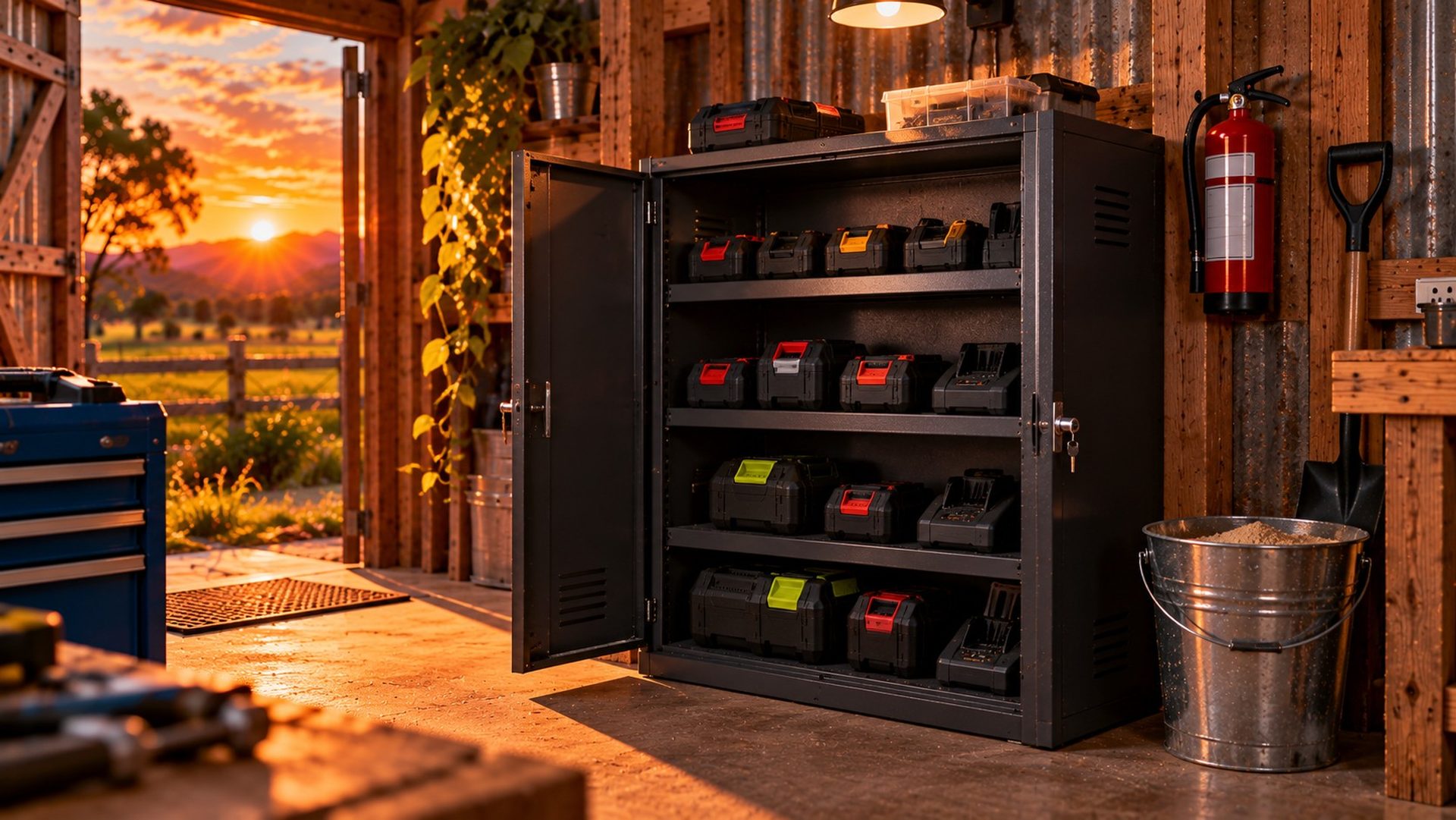
Lithium Battery Storage and Disposal
How to store tool batteries safely, the warning signs to never ignore, and how to dispose of them properly in Australia.
Read guide →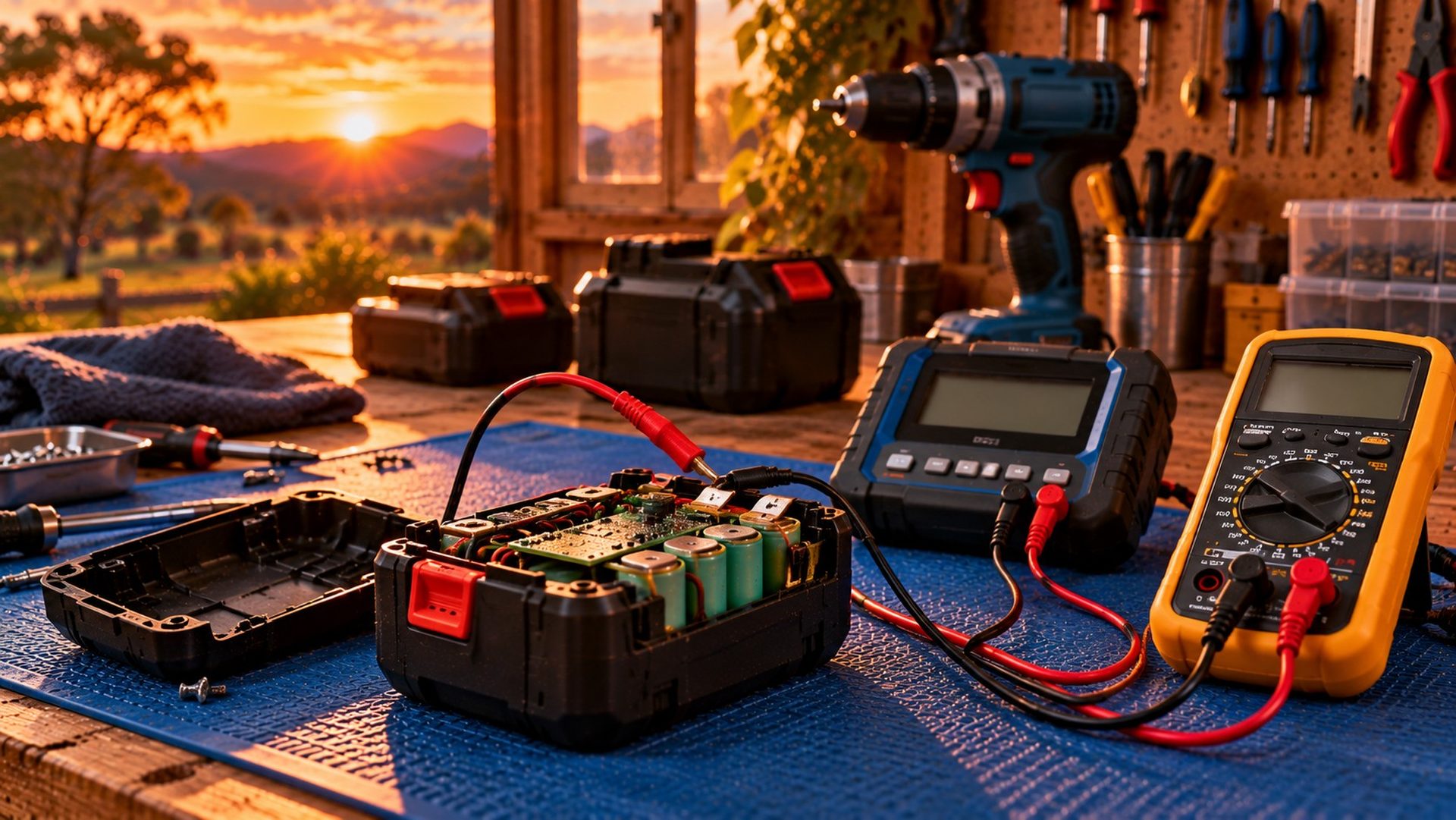
Is a Battery Pack Rebuild Worth It?
What's inside a tool pack, what a rebuild involves, and when it makes sense to rebuild, replace or recycle.
Read guide →