Why Won't My Cordless Battery Charge?
A step-by-step check of the charger, the contacts and the pack voltage, so you know where the fault really is.
A battery that won't charge isn't always a dead battery. The fault can be in the charger, the contacts, the temperature, or the pack's protection board. Work through these checks in order before you spend money.
1. Check the charger first
- Try a second battery of the same type in the charger. If that one charges, the charger is probably fine.
- If you have a second charger, try the problem battery in it.
- Check the power point, plug and lead. Don't use a charger with a damaged lead or case.
- Look up what the charger's lights mean in its manual. Many chargers tell you exactly what they don't like (see Charger Flashing Lights and the BMS).
2. Check the temperature
Most chargers won't start charging a pack that's too hot or too cold. A pack straight off a hard-working mower or chainsaw is often too hot. A pack left in a cold shed overnight may be too cold. Let it come to room temperature and try again.
3. Clean and check the contacts
- Look for dirt, grass, sawdust or corrosion on the battery and charger terminals.
- Look for bent, burnt or loose terminals.
- Clean them gently with the charger unplugged and the battery removed.
4. Measure the pack voltage
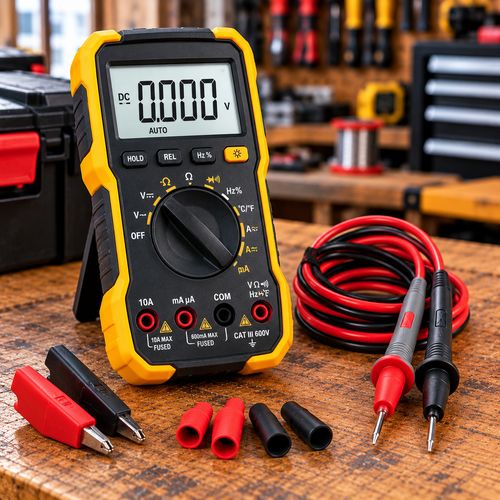
A multimeter set to DC volts tells you a lot. Measure across the pack's main positive and negative terminals. Check the pack's label for its nominal voltage first.
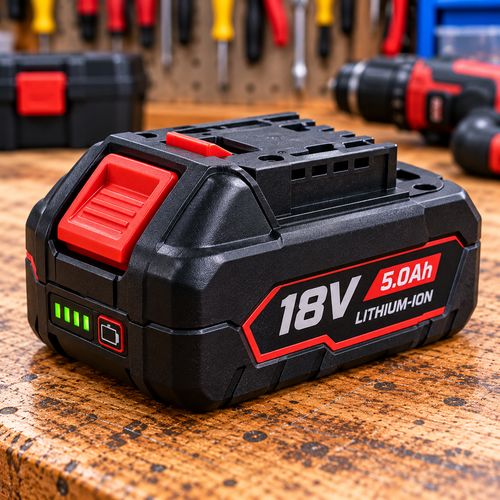
Most lithium-ion tool packs are made of cells in series. A typical lithium-ion cell is about 3.6V nominal and about 4.2V when fully charged. So a common "18V" pack (sold as "20V max" by some brands) has 5 cells in series: about 18V nominal and about 21V full.
- Reads near full: the cells may be fine, and the fault is more likely in the charger, the contacts or the pack's electronics.
- Reads very low or zero: the pack may be deeply discharged, or its protection board may have switched off the output.
Many chargers deliberately refuse a pack that's below a minimum voltage, because deeply discharged lithium cells can be damaged and unsafe to recharge.
Safety: don't try to "kick start" a deeply discharged pack with another battery or power supply. Damaged cells can overheat or catch fire during charging, sometimes later. If a pack has gone very low, the safest choice is usually to recycle it.
5. Look for warning signs
Stop and don't charge the pack if it's swollen, cracked, leaking, smells odd, gets hot on the charger or has been dropped hard or got wet. See Lithium Battery Storage and Disposal.
6. Decide what to do
- Charger fault: replace the charger with a genuine one for your battery system.
- Dirty contacts: clean and test again.
- Pack fault: check the warranty first. Opening a pack usually voids it. If it's out of warranty, see Is a Battery Pack Rebuild Worth It?
Handy gear
As an Amazon Associate I earn from qualifying purchases. Prices and availability are shown on Amazon.