Spot Welder vs Soldering for Battery Packs
Why packs are spot welded, and where soldering is the right tool.
Rebuilding a pack means joining cells together. The two ways people do it are spot welding and soldering. They're not equal, and the difference is heat.
1. Spot welding
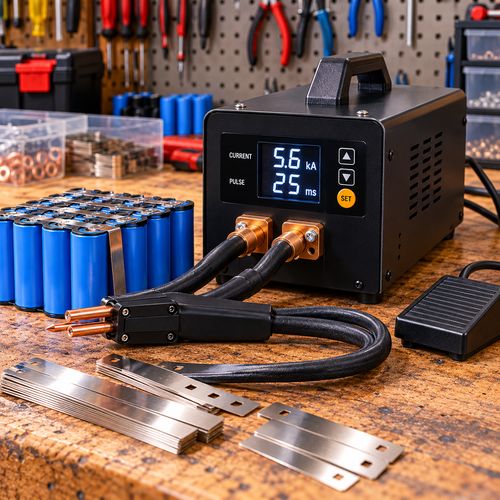
A spot welder passes a very short, high current pulse through nickel strip and the cell's end cap, fusing them together in a fraction of a second.
- The heat is brief and stays at the weld, so the cell isn't cooked.
- It's how factory packs are made.
- You need a spot welder and pure nickel strip of a thickness that suits the current.
2. Soldering to cells
Soldering straight onto a cell's end cap needs a hot iron held on for a while. That heat soaks into the cell and can damage its seals and internal parts, including safety parts, even if the cell seems fine afterwards.
- Don't solder directly to lithium-ion cells.
- Some cells come with tabs already welded on by the maker. Soldering to the end of a tab, away from the cell, is a different job.
3. Where soldering is the right tool
- Wires to the battery management board (BMS).
- Balance leads and the main output leads.
- Wire to the end of nickel strip, away from the cell.
A temperature-controlled soldering iron makes quick, clean joints and keeps heat down.
4. Choosing a spot welder
- Cheap welders can make weak welds that look fine and then break. Test welds on scrap first and pull-test them.
- Look for adjustable pulse energy and a strip thickness rating that suits your strip.
- Use pure nickel strip. Nickel-plated steel strip has higher resistance and gets hotter.
5. Safety for any pack rebuild
- Lithium cells hold a lot of energy. A short while building a pack can cause burns or a fire.
- Work on a clear, non-flammable bench with eye protection, and keep tools and strip away from loose cell ends.
- Use insulation rings and battery insulation paper where the original pack had them.
- Fit a BMS that suits the pack, the same as or better than the original.
- If you're not confident, don't rebuild. A replacement pack may be the safer choice.
Handy gear


As an Amazon Associate I earn from qualifying purchases. Prices and availability are shown on Amazon.
Related guides

18650 vs 21700 Cells Explained
What 18650 and 21700 cells are, how they compare, and why it matters for your packs.
Read guide →
Is a Battery Pack Rebuild Worth It?
What's inside a tool pack, what a rebuild involves, and when it makes sense to rebuild, replace or recycle.
Read guide →