Drill Driver vs Impact Driver vs Hammer Drill
What each one is built for, and which one to buy first for your workshop.
A drill driver, an impact driver and a hammer drill look much alike, and they all spin a bit. But each is built for a different job, and using the wrong one is slow work and hard on the tool and battery.
1. Drill driver
The all-rounder. It has a chuck that grips round and hex bits, a clutch you can set so it stops before it strips a screw, and usually two speeds.
- Best for: drilling holes in timber, metal and plastic, and driving small to medium screws.
- Not for: masonry or long, heavy screws.
2. Impact driver
Built for driving screws and bolts. When the screw gets hard to turn, a hammer inside gives rapid sideways blows that help it spin. It takes hex-shank bits in a quick-release holder.
- Best for: long timber screws, batten screws, coach screws and driving lots of screws quickly.
- Not for: fine work where you need a clutch, or drilling large clean holes.
Impact drivers are compact and easy on the wrist, because the hammer action does the hard work instead of your arm.
3. Hammer drill
A drill driver with an extra setting that adds a fast forward-and-back hammering action. That lets the bit chip its way into brick, block and concrete.
- Best for: drilling brick, block and light concrete, plus everything a drill driver does.
- Not for: lots of heavy concrete drilling. That's a job for a rotary hammer.
Use masonry bits for masonry, and switch the hammer setting off for timber and metal.
4. Which one first?
For most home workshops, a hammer drill covers the most jobs in one tool. Add an impact driver when you start driving a lot of screws. Many brands sell the two as a kit that shares the same batteries.
5. Battery tips
- An impact driver works well on a small, light pack.
- Hammer drilling into masonry draws more power, so a larger pack (4Ah or more) helps.
- Stay with one battery system so every pack fits every tool.
Weighing up motor types too? See Brushless vs Brushed Drills.
Handy gear


As an Amazon Associate I earn from qualifying purchases. Prices and availability are shown on Amazon.
Related guides

Brushless vs Brushed Drills: What's the Difference?
What brushed and brushless motors are, what you notice in use, and when brushless is worth paying for.
Read guide →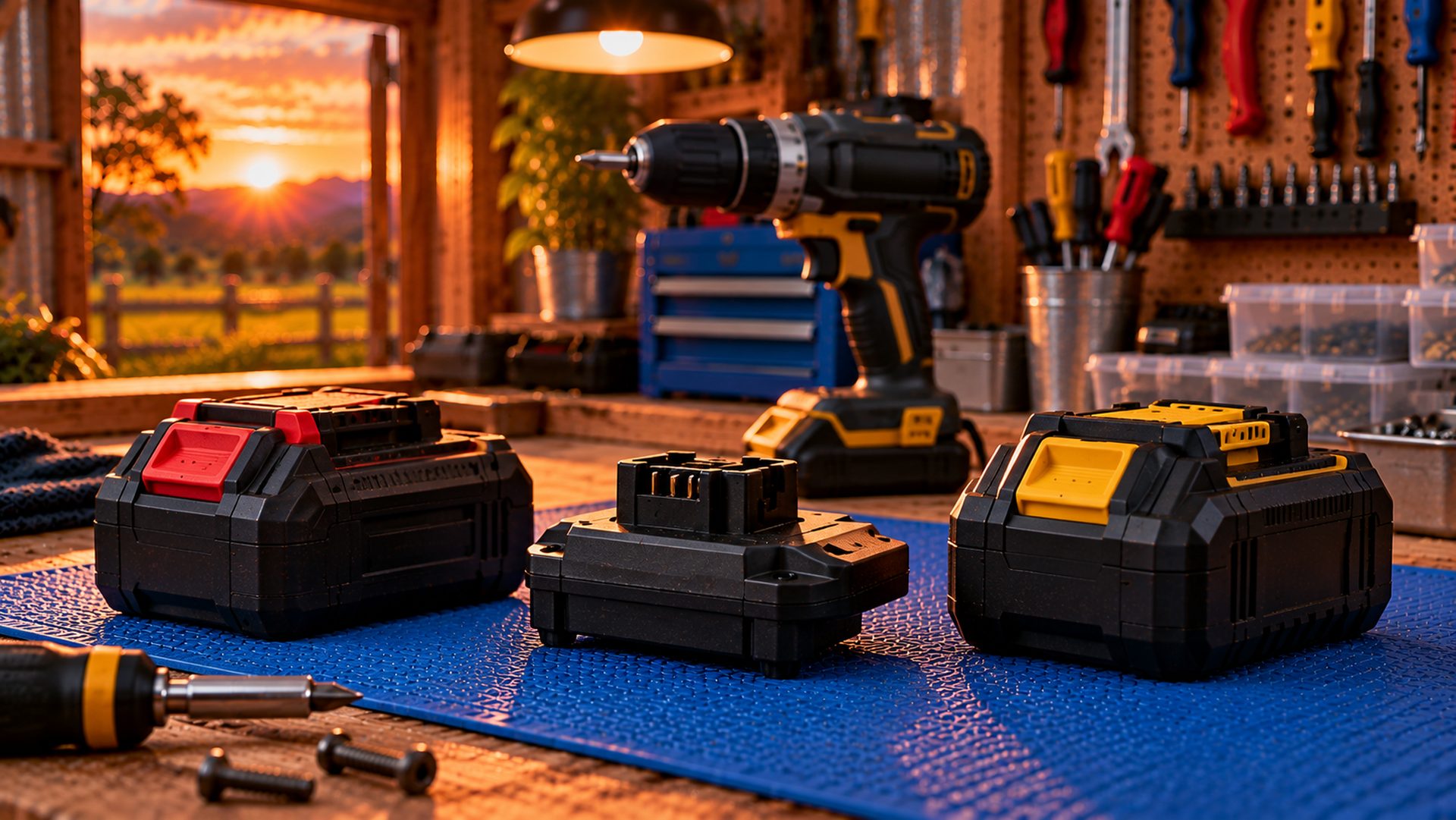
Battery Adapters Between Brands: Are They Safe?
How brand-to-brand battery adapters work, what can go wrong, and what to check before you use one.
Read guide →